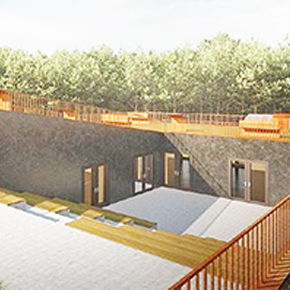


The site of the camp at Lety u Písku is linked to a long and disturbing past. It is located about 30 km north of Písek, near the Orlík water reservoir. (You can learn the detailed history of the camp here).
It is an authentic place where the Protectorate's so-called gypsy camp operated between 1942 and 1943. It was one of two places (the other was in Hodonín near Kunštát) where entire families of Moravian and Czech Roma and Sinti were forcibly concentrated before being transported to the concentration and extermination camp at Auschwitz II-Birkenau. The camp buildings themselves were razed to the ground and burned after the last mass transport in 1943. During the period of its existence (August 1942 - August 1943), approximately 1,300 men, women and children passed through the camp. It is certain that a total of 326 people died in Lety, most of the victims were children.
Since the 1970s, a large-scale pig farm has been operating here. It occupied practically the entire area of the former camp and stood near a provisional burial ground. Over time, the pig farm became a symbol for the disregard of historical events, a reminder of the lack of respect for the people who suffered and died in the camp.
In May 1995, then President Václav Havel unveiled a monument to the victims of the camp on the site of the supposed graves.
In 2018, after twenty years of appeals from individuals and international organisations, that the Czech state redeemed the farm. The Museum of Romani Culture became the administrator of the site in the same year.







MUSEUM OF ROMANI CULTURE
a state-subsidised organisation
Bratislavská 67
602 00 Brno
Tel.: +420 545 581 206
Tel.: +420 545 571 798
Brno:
Tuesday–Saturday: 10 AM–6 PM
Hodonín u Kunštátu:
April–October
Wednesday—Sunday : 10 AM—5 PM
Lety u Písku:
April–October
Thursday—Sunday : 10 AM—5 PM