

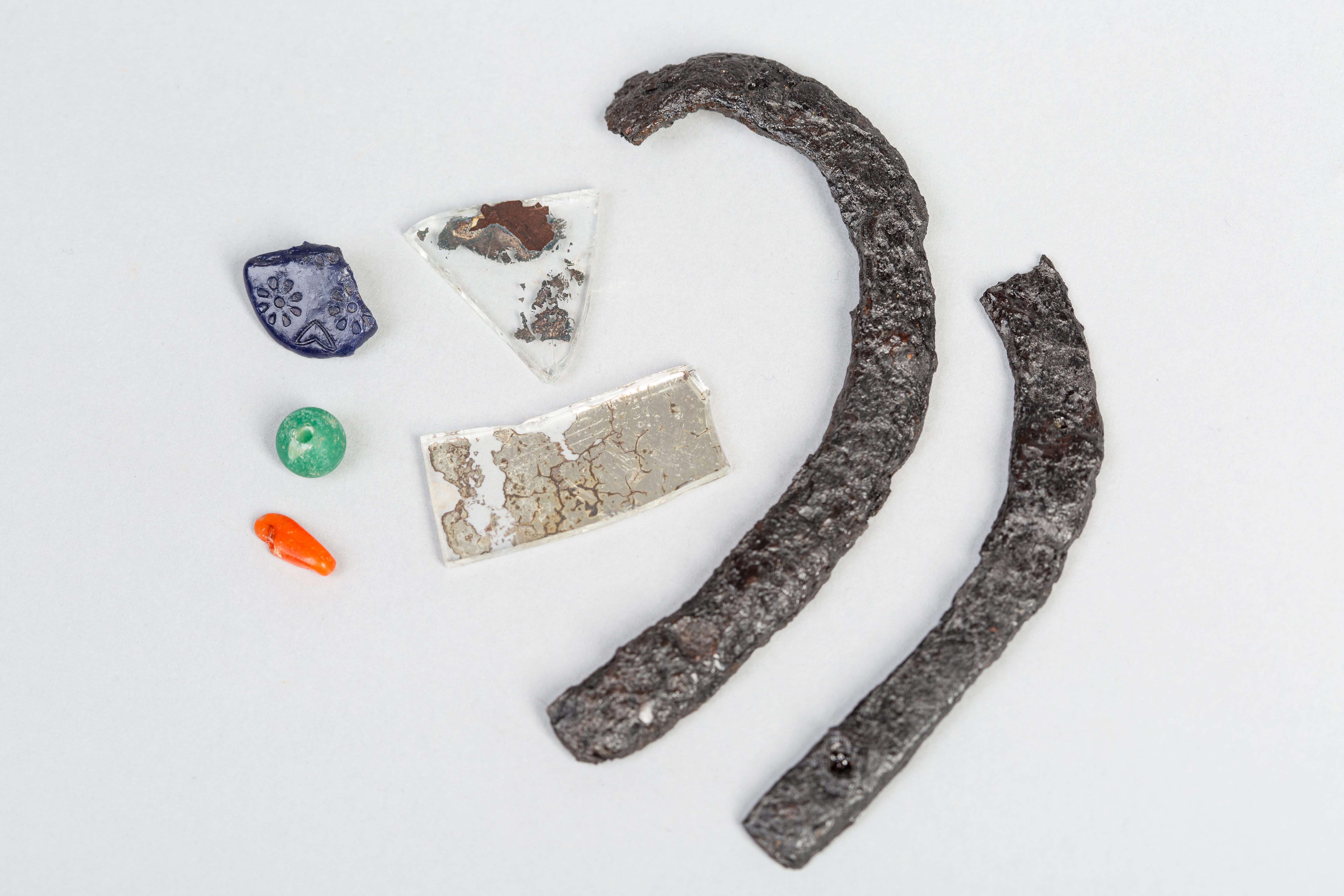
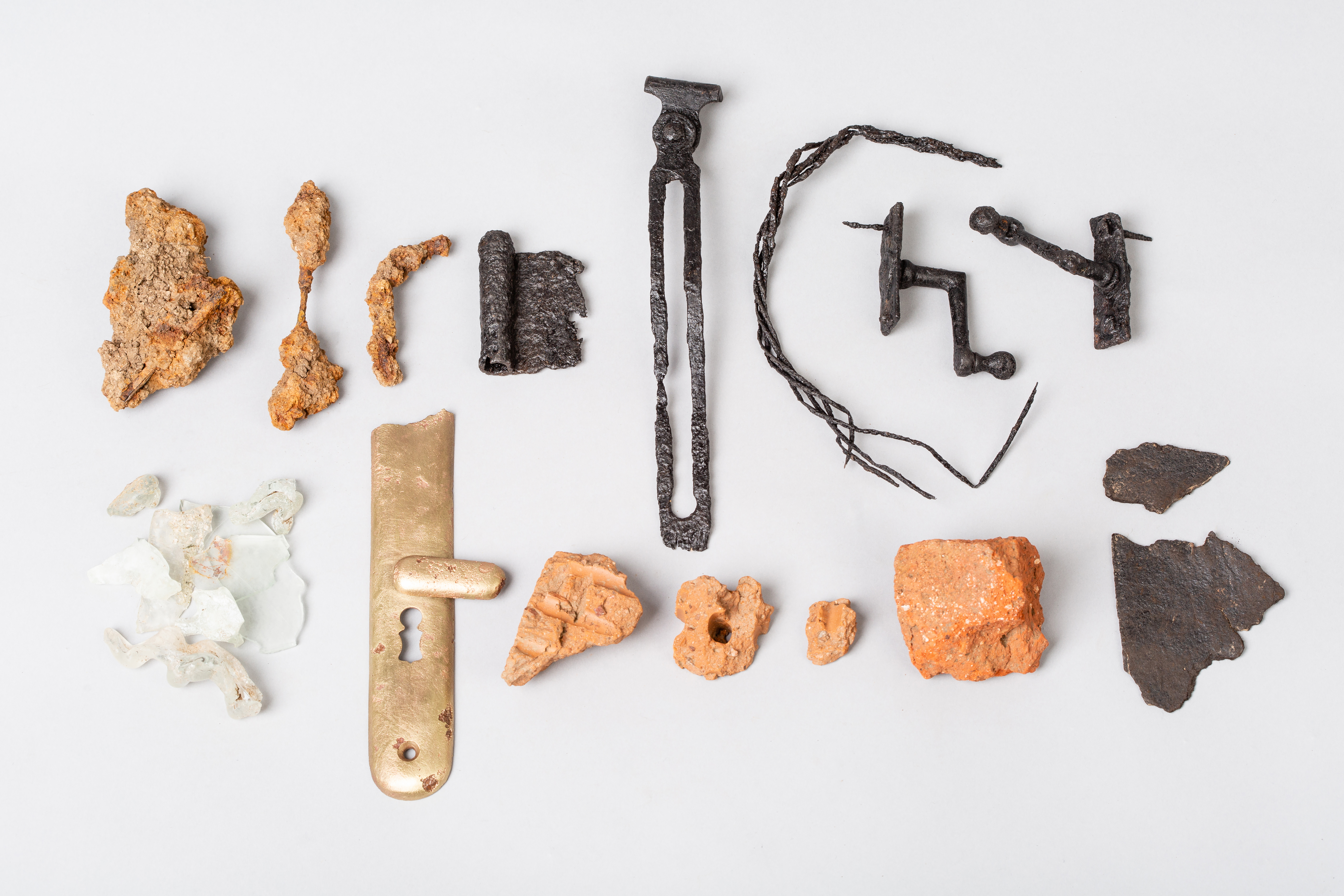
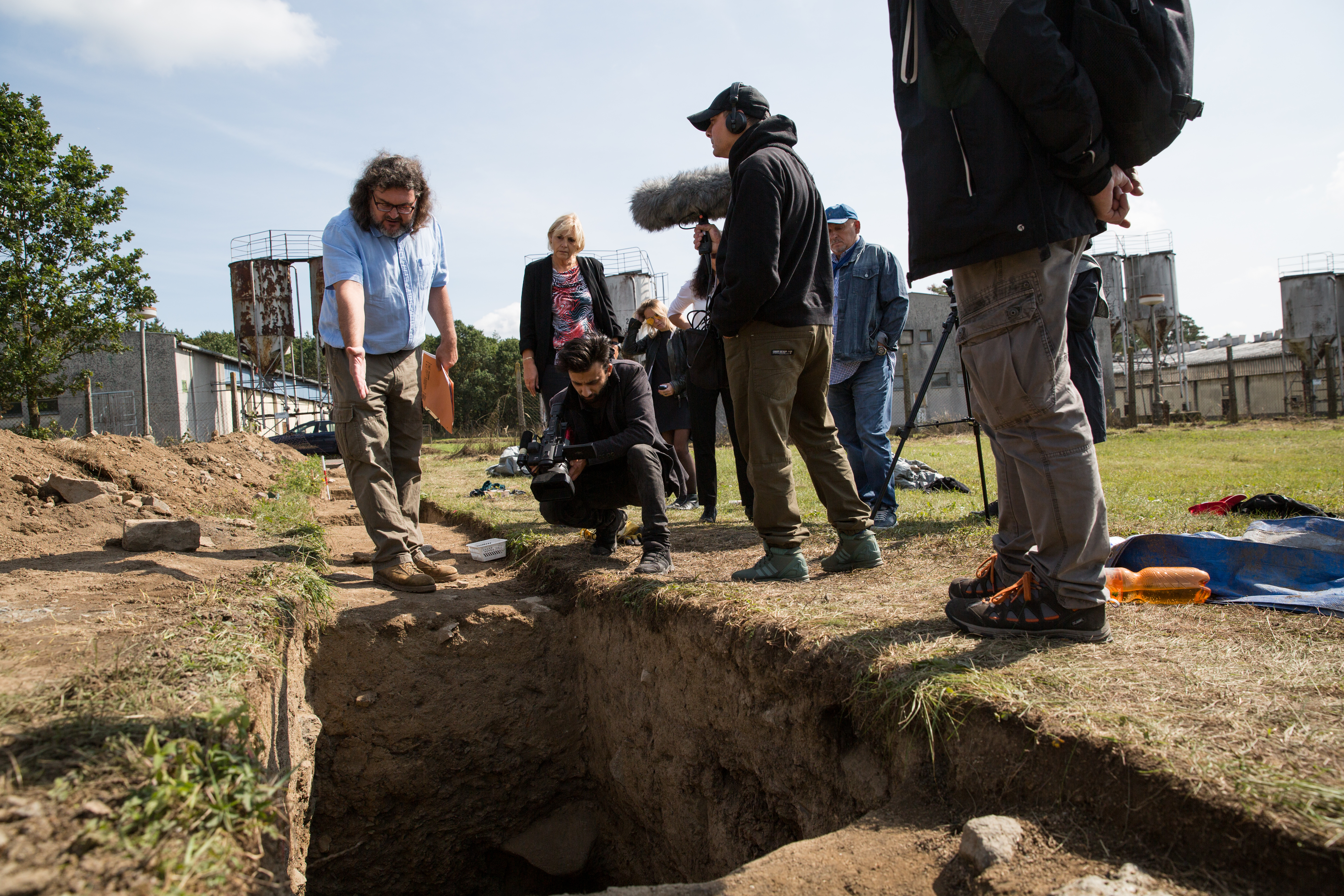
Since August 2019, an archaeological survey has been underway on the grounds of the former industrial pig farm at Lety which overlapped the grounds of the former “Gypsy Camp” there. Archaeologists from the Faculty of Arts at the University of West Bohemia (ZČU) in Plzeň undertook this work under the leadership of Pavel Vařeka.
The aim of the survey was to ascertain the character and scope of the archaeological situation, to discover samples from different parts of the camp, and to acquire material testimony as to life in the camp. The survey involved non-invasive methods (a geophysical and a geo-radar survey, implemented by the Archaeology and Museology Institute at the Faculty of Arts, Masaryk University) and uncovering samples from the full area of the former camp. At the same time, it was the first archaeological survey ever to directly investigate the grounds of the former industrial pig farm where they overlapped the grounds of the former camp. The first probe was undertaken by archaeologists on the municipally-owned plots of land adjacent to the industrial pig farm in 2017. Survey work directly on the grounds of the industrial pig farm were not permitted by the owner at that time, the AGPI, a. s. firm.
“The ruins of the camp were quite well preserved,” said the head of the survey, Pavel Vařeka of the Faculty of Arts at ZČU. It has been proven that most of the former concentration camp did lie on the grounds of the former industrial pig farm. “In the western part of the camp, where there were never any feed halls erected, we uncovered the outlines of the camp’s yard with the remains of rows of smaller wooden barracks measuring 2.5x3 meters, where prisoners were housed, and the remains of two large prison barracks measuring 9x25 m, which were additionally built in the middle of the yard. The constructions were wooden with foundations of brick or stone. In many locations we are documenting sites of incineration which document the destruction of the camp by setting it on fire,” Vařeka describes.
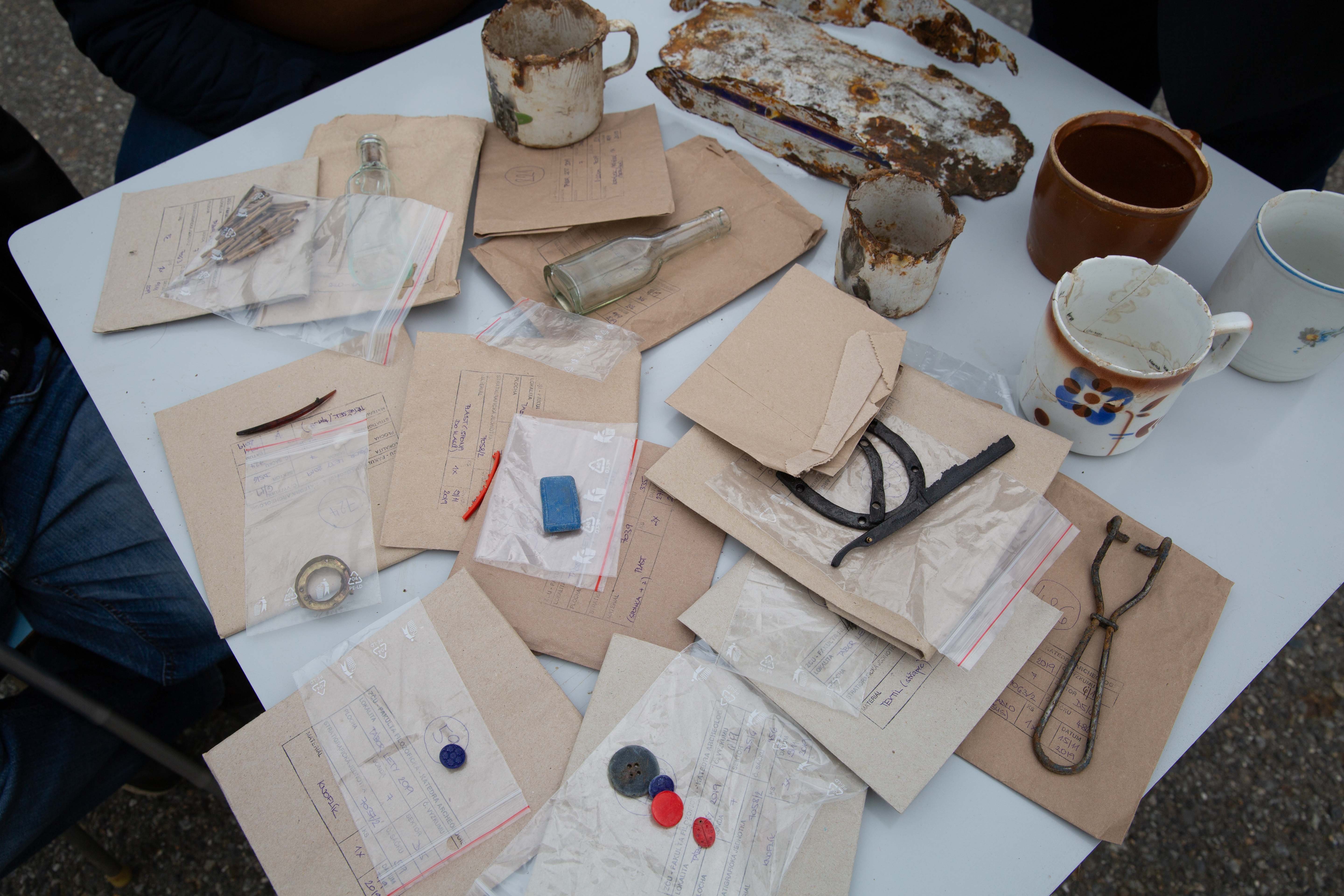
In the eastern, or in other words, the operational part of the camp, the survey proved the existence of buildings serving the everyday operations of the camp. The archaeologists uncovered well-preserved foundations of brick buildings - a building serving as a washroom and laundry, a stable, and a disinfection station, including the original floors. Along the southern edge the remains of fencing that had been burned were found. Detailed insight into the time of the camp’s destruction in 1943 was afforded by the garbage pit into which pieces of ruins were thrown which, thanks to the specific soil conditions, were conserved uniquely, including objects made of organic materials such as components of clothing, shoes and many personal items belonging to the prisoners, as well as parts from the buildings’ wooden construction elements. “The result consists of a representative sample of findings which allow us literal insight into life in the camp," Vařeka comments.
“In the easternmost part, where the industrial pig farm halls are standing, absolutely nothing has been preserved of the camp. When the farm was built in the 1970s, the remains of the camp there were excavated, and the earth and debris were transported to the western part, where it covered and still preserves most of the camp,” explains Vařeka. “Up until the 1970s, when the industrial pig farm was built, the ruins of the camp must have been clear to see on the ground’s surface,” Vařeka reveaks one of the most surprising findings of the survey. That is also confirmed by photographs taken by the Czechoslovak Army in 1974 where the ground plan of the camp is still visible.
Thanks to the survey undertaken, the former camp’s position has been exactly localized, and the tendentious speculations have been refuted that the industrial pig farm (which as of now is defunct) did not overlap the space of the former camp.
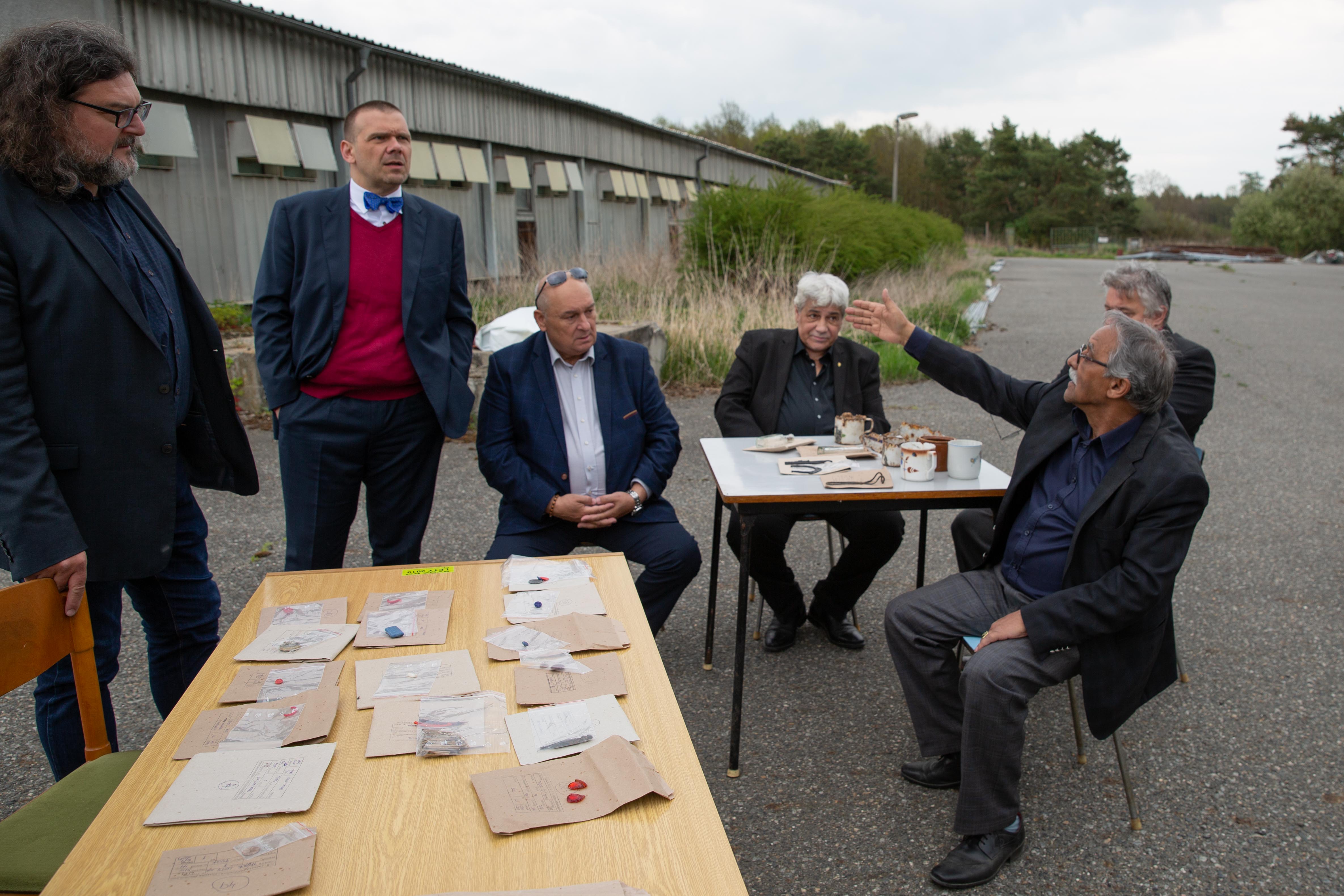
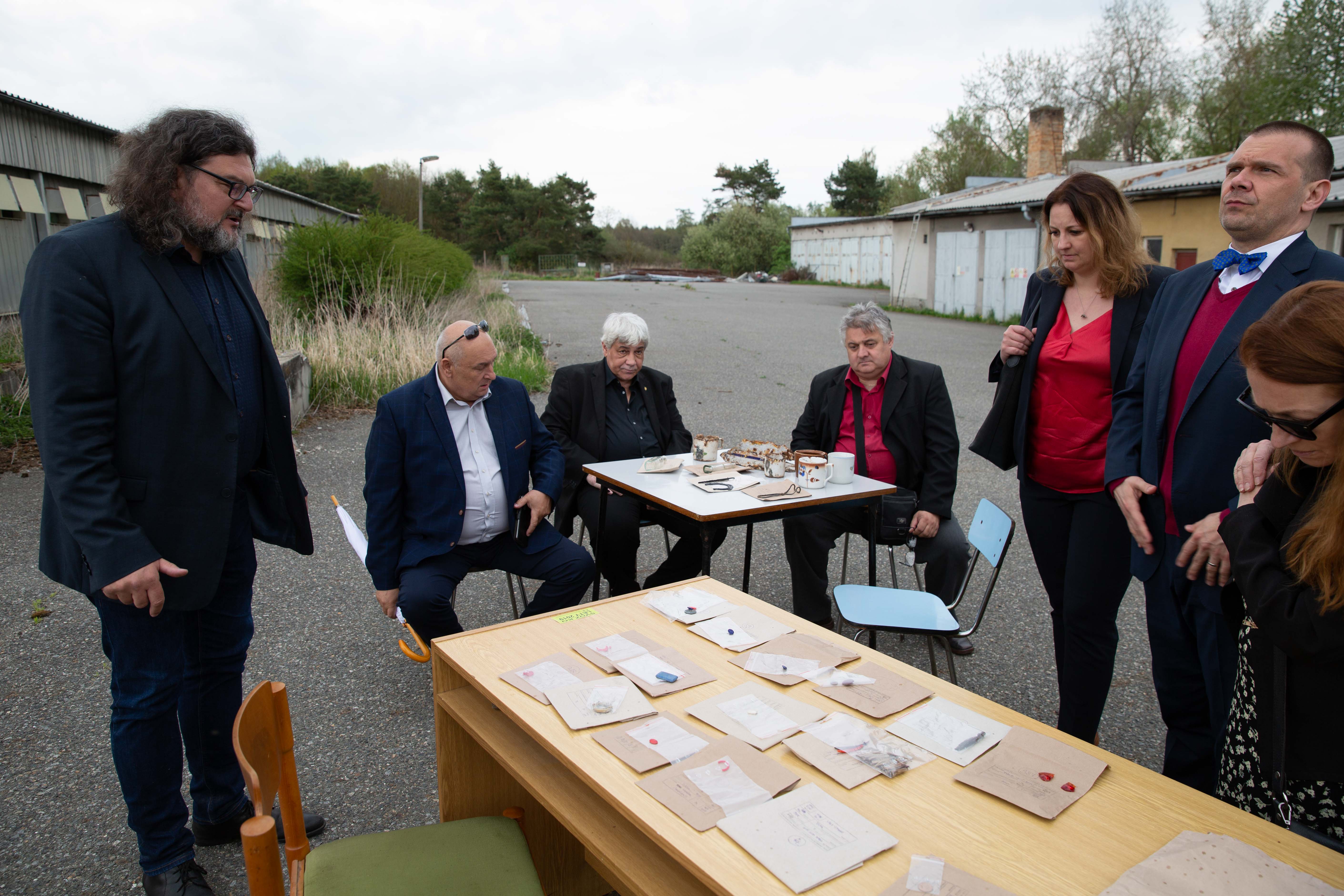
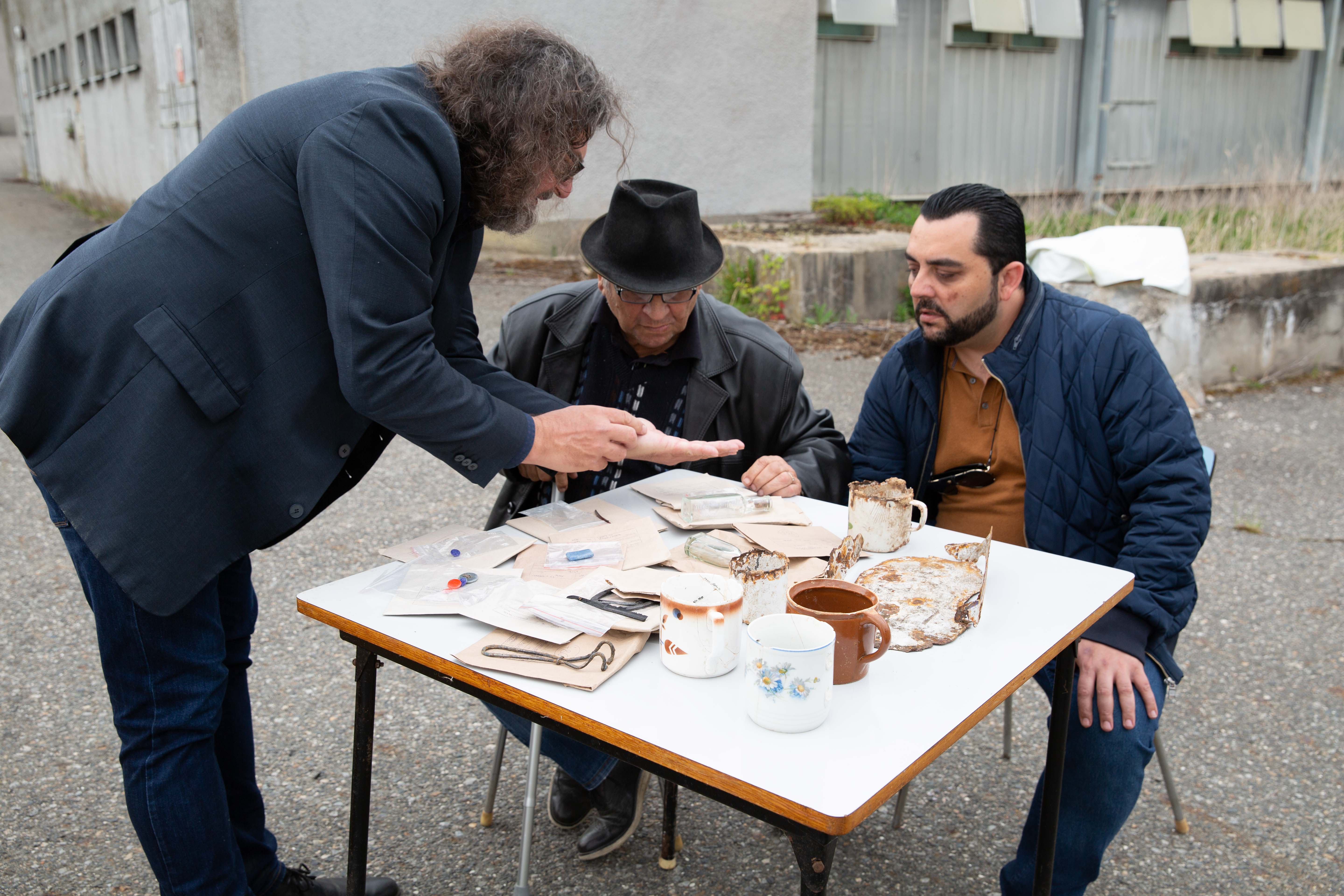
On 8 May 2022, as part of the annual Commemorative Ceremony to honour the memory of the Romani and Sinti victims of the Holocaust at the Lety u Písku concentration camp, the material findings of the archaeological survey were presented. Descendants of survivors and eyewitnesses got to familiarize themselves with the objects (see the Photo Gallery).







MUSEUM OF ROMANI CULTURE
a state-subsidised organisation
Bratislavská 67
602 00 Brno
Tel.: +420 545 581 206
Tel.: +420 545 571 798
Brno:
Tuesday–Saturday: 10 AM–6 PM
Hodonín u Kunštátu:
April–October
Wednesday—Sunday : 10 AM—5 PM
Lety u Písku:
April–October
Thursday—Sunday : 10 AM—5 PM


